Where it starts
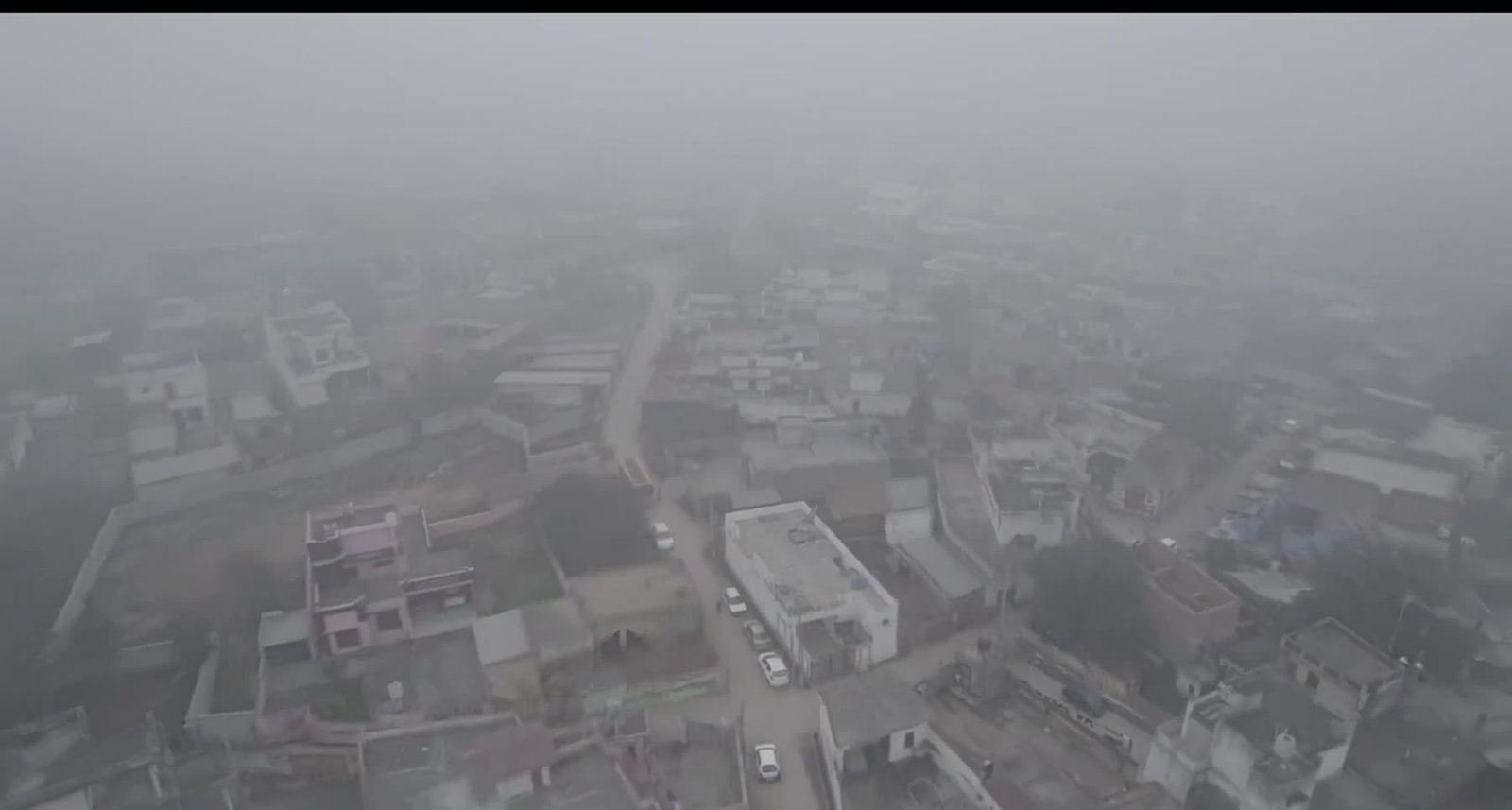
Exhaust from cars and industry
releases pollutants into the air
Every tailpipe and every stack adds to the same mixture. Most of it you will never see.
What are you breathing?
A synthetic biology system from Team SNIoE that reads the air, reports what it finds, and reduces what it can.
Delhi · every year
0
Delhi's air does not spare anyone. It is counted in hospital admissions, in inhalers, in years taken off the end of ordinary lives — and it is worst for the people who cannot shut a window on it.
Respiratory disease
One person in five now lives with a respiratory condition driven by what is in the air. Not a forecast. A count.
Where it starts
Every tailpipe and every stack adds to the same mixture. Most of it you will never see.
The one that matters
Particulate matter under 2.5 micrometres across — roughly a thirtieth the width of a human hair.
Delhi annual mean · 10× the WHO guideline
Point of entry
Nose hair, mucus, the branching turns of the airway — all of it is built to catch dust. PM2.5 is not dust. It rides the breath straight past.
Deep lung
Past the bronchi, past the bronchioles, into the alveoli — the thin wet surface where oxygen crosses into you. The particles stop there.
Immune response
A macrophage is supposed to clear what does not belong. It grips the particle — and starts signalling for help it cannot get.
Day after day
One bad day clears. A bad decade does not. Cytokine production stays switched on, and the tissue never gets the quiet it needs to repair.
To tackle this problem, Team SNIoE presents
A synthetic biology system engineered to sense airborne particulate matter, report what it finds, and act on it — at the scale the problem actually happens.
How it works
An engineered sensing circuit that registers particulate exposure the way a cell would — continuously, and without a lab in the loop.
Exposure drives a reporter output, turning an invisible dose into something a person can actually read off.
Coupling detection to a degradation pathway, so the system does not only measure the problem — it takes a bite out of it.
You cannot
hold your breath
iGEM 2026 · Shiv Nadar Institution of Eminence